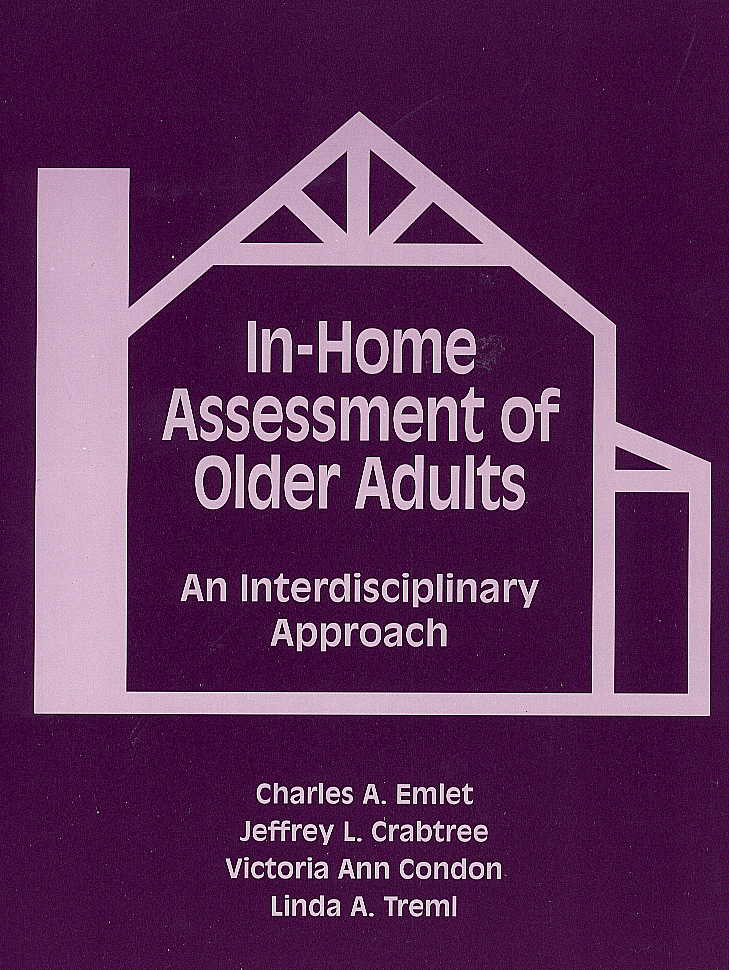
 by Charles Emlet, Jeffrey Crabtree, Victoria Ann Condon & Linda Treml
This manual explains the underlying principles of assessment and includes practical information needed for successfully assessing and screening older individuals in their home.
Full Description:
Stock: This manual is OUT OF PRINT! However old stock be available. Contact us for availablity. NON-RETURNABLE
This manual explains the underlying principles of assessment and includes practical information needed for sucessfully assessing and screening older individuals in their home. Case Studies are used extensively to provide the reader with practical, real life examples of the problems associated with aging. Using the interdisciplinary approach will help the reader understand how to complete an assessment from their professional discipline, and assists them in making appropriate referrals outside their area of expertise. An important aspect of this book it that it has been written from the perspective of numerous professional disciplines. Thus the theory and perspective are approached from many different professional angles. Also, many of the assessment instruments are designed to be copied and used easily, which makes this a valuable tool to be used on a everyday basis. Using the material presented here your clients lives will be improved and you can continue to help them maintain their independence in their home environment as appropriate and for as long as possible.
OUT OF PRINT
- Chapter 1 - Introduction to In-Home Assessment of Older Adults
- Community-Based Services
- Consequences of the Demographic Imperative for Older Adults
- The Importance of Home Care
- The In-Home Assessment
- Interviewing Older Adults
- How to use this book
- Chapter 2 - Accessibility and Safety
- Legislative Efforts to Create an Accessible Environment
- Home Safety and Accessibility Needs of the Older Person
- Framework for a Home Safety and Accessibility Assessment
- Barriers to Home Safety and Accessibility
- Components of a Home Safety and Accessibility Assessment
- Realistic Considerations
- Conclusion
- Appendix 2-A
- Appendix 2-B
- Chapter 3 Assessing Activities of Daily Living
- Prevalence of ADL Dependence
- The Meaning of ADL Independence to Older Adults Living at Home
- ADL Assessments
- ADL Screening and Assessment Tools
- Conclusion
- Chapter 4 - Basic Mobility Needs
- Definition and Scope of a Basic Mobility Assessment
- Measuring Basic Mobility Skills
- Care Planning Based on Function - Versus Disease-Oriented Evaluation
- A Clinical Decision-Making Framework
- Screening for Loss of Mobility Related to Falls, Pain and Urinary Incontinence
- Evaluating Exercise Needs in the Older Adult
- Mobility Problems and Referral for In-Home Assessment
- Conclusion
- Chapter 5 - Physical Systems Assessment
- The Home Visit
- Establishing the Atmosphere
- The Health History
- Forms or Tools for Gathering Data
- Alternative Medicine Techniques
- Physical Examination and Evaluation
- Body Systems Assessment
- Plan of Action
- Conclusion
- Chapter 6 - Medication Management and the Elderly
- Types of Medication NonCompliance
- Patient Assessment
- Intervention to Reduce Noncompliance
- Alternative Pharmacology
- Cultural Issues
- Conclusion
- Chapter 7 - Assessing Nutritional Needs
- Nutrients Most Often Lacking in the Elderly
- Factors Affecting Nutritional Status and Intake
- Special Nutritional Considerations of the Elderly
- Supplemental Feeding
- Primary Nutrition Screening of the Homebound Elderly
- Nutrition Screening by Nonnutritionists
- Nutrition Assessment of the Homebound Elderly
- Nutritional Needs of the Elderly
- Dietay Recommendations
- Nutrition Managment
- Conclusion
- Chapter 8 - Assessing Social Function, Support, and Socioeconomic Status
- The Importance of Role
- Aging and Role Change
- Coping and Adaptation to Aging
- Assessment of Socioeconomic Status
- The Benefit of Financial Evaluation
- Assessing Social Functioning and Support
- Screening for Alcohol Abuse in Older Adults
- Identification and Assessment of Elderly Abuse
- Conclusion
- Chapter 9 - Assessing Disturbances in Mood, Thought, and Memory
- Screening for Depressive Symptoms
- Screening for Paranoia
- Assessing Memory and Other Cognitive Functions
- Conclusion
- Chapter 10 - Referrals to Other Care Providers and Other Communication Issues
- Referrals for Service
- Communication Tools and Problems
- Conclusion
- Chapter 11 - The Informal Caregiver
- Involving the Support System in the Assessment Process
- The Importance of Family and Other Informal Supports
- Who are the Caregivers?
- Why People Act as Caregivers (Finial Responsibility)
- The Impact and Burden of Caregiving
- Assessing the Caregiver
- Assessing Motivation
- The Caregiver's Physical Health
- Assessing Caregiver Coping
- The Caregiver's Psychological and Cognitive Status
- The Relationship of Formal and Informal Support
- Interventions with Caregivers
- Putting It All Together
- Conclusion
- Appendix 11-A
- Chapter 12 - Community Reosurces
- Older Americans Act Programs
- Outreach and Community-Based Programs
- The Americans with Disabilities Act
- Transportation Services
- In-Home Care Programs
- Legal Services
- Income Assistance Programs
- Housing Options and Out-Of-Home Placement
- Health Insurance Counseling
- Case Management
- Personal Response Systems
- Conclusion
- Chpater 13 - Ethical Issues
- Unique Characteristics of Home Care
- Ethical Theories
- Ethical Principles and Dilemmas
- Approaches To Resolving Dilemmas
- Decision-Making Model
- Conclusion
- Chapter 14 - Conclusion
- The Demographic Imperative
- The Changing Environment of Health Care
- Appendix A - State Agencies on Aging
- Appendix B - United States Administration on Aging Offices
- Appendix C - Directory of State Offices Responsible for Adult Protective Services and Elder Abuse
- Index
- About the Authors
Stock: This manual is OUT OF PRINT! However old stock be available. Contact us for availablity NON-RETURNABLE
|